Simple and Sinister progress tracking with AI
Simple and Sinister, is Pavel Tsatsouline's minimalist kettlebell program, builds real-world strength, power, and resilience with just two movements: the kettlebell swing and the Turkish get-up. The routine is designed to be simple to learn, quick to complete, and scalable for any fitness level while still delivering profound improvements in strength, conditioning, and mobility.
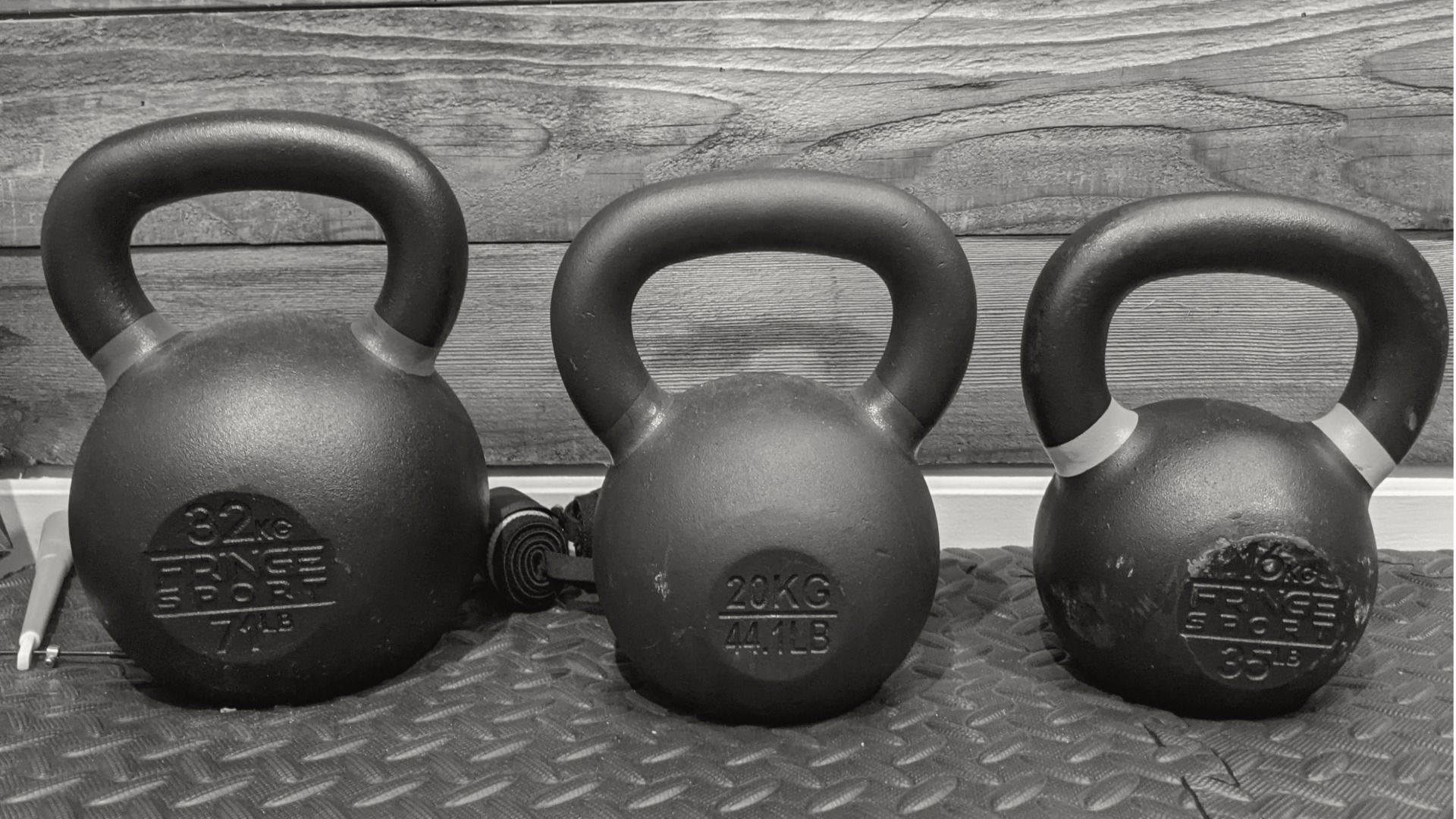
What is Pavel Tsatsouline's Simple & Sinister protocol?
Pavel distilled decades of kettlebell coaching into a straightforward daily practice. Each session revolves around:
- 100 hard-style kettlebell swings performed in 10 sets of 10. You mix two-hand and one-hand swings based on your experience and grip strength, resting just enough to maintain crisp technique.
- 10 Turkish get-ups performed as 5 reps per side. The get-up teaches full-body coordination, shoulder stability, and core strength under load.
The work is intentionally minimalist, allowing you to focus on tension, breathing, and crisp technique rather than juggling a complicated program.
Session structure
- Warm-up and mobility: Joint circles, Pavel's prying goblet squat, and hip bridges prepare the hips and shoulders.
- Swings: Set a timer or use cadence-based rest (e.g., start each set every 30-60 seconds) to stay honest with recovery.
- Turkish get-ups: Alternate sides every rep while moving slowly and under control.
- Cool-down: Light mobility or fast-and-loose drills to relax tension.
Most training days take 20 to 30 minutes, making the habit easy to sustain.
Progression and goal standards
- Simple standard: Men use a 32 kg kettlebell (24 kg for women) for 100 swings in under 5 minutes and 10 get-ups in under 10 minutes while breathing calmly.
- Sinister standard: Men progress to a 48 kg kettlebell, women to 32 kg, while maintaining the same time caps and pristine technique.
- Increase weight only when your form stays sharp, sessions feel repeatable, and recovery is solid.
Benefits of Simple & Sinister
- Builds posterior-chain power, core stability, and shoulder durability with minimal equipment.
- Encourages daily practice and movement quality over variety for faster skill acquisition.
- Fits busy schedules; you can train at home with a single kettlebell.
- Scales seamlessly—same program, heavier bell, improved results.
Equipment and safety essentials
- Choose a properly cast or competition-style kettlebell with a smooth handle.
- Train barefoot or in flat shoes to grip the ground and protect your back.
- Lock in technique by filming sets, working with a coach, or using AI tools for feedback.
- Respect recovery by balancing high-tension swings with fast-and-loose drills.
How I'm tracking Simple & Sinister with AI
In full disclosure I work with AI every day; it is part of what I do. I like to find interesting ways to leverage AI for insights and save time. Here I am learning how to use AI to help me progress in the Simple and Sinister protocol by logging data in Google Sheets, reviewing heart-rate metrics from Garmin Connect, and asking ChatGPT to analyze trends and recovery patterns.
I maintain a Google Sheets dashboard where I log every session, track kettlebell weights, and note the time needed to complete each portion of the workout. After each session I export the Garmin activity data, let ChatGPT map the HIIT entries to my log, and highlight pace or recovery trends that might signal when to increase load. This workflow helps me visualize progress instead of guessing. See the snippet below.
| Date | Garmin Activity | Calories | Avg HR | Total Time | KBS Weight | KBS Time | TGU Weight | TGU Time |
|---|---|---|---|---|---|---|---|---|
| 9/25/2025 | HIIT | 226 | 129 bpm | 0:24 | 16 kg | 9:35 | 12 kg | 10:00 |
| 9/27/2025 | HIIT | 215 | 116 bpm | 0:29 | 16 kg | 10:13 | 16 kg | 13:01 |
| 9/30/2025 | HIIT | 212 | 113 bpm | 0:29 | 16 kg | 9:00 | 16 kg | 14:30 |
| 10/1/2025 | HIIT | 216 | 123 bpm | 0:25 | 16 kg | 9:35 | 16 kg | 10:31 |
| 10/6/2025 | HIIT | 250 | 130 bpm | 0:27 | 16 kg | 7:42 | 16 kg | 11:39 |
| 10/9/2025 | HIIT | 239 | 133 bpm | 0:25 | 16 kg | 7:32 | 16 kg | 10:27 |
The goal is to use the combined data along with ChatGPT to help me determine when I should go up in weight.
Why I decided to use AI for this?
I have done S&S in the past and I enjoy it. I find the workout to be super helpful for everyday strength and great for my BJJ. The problem I faced in the past is that I progressed too quickly and ended up injuring myself. The injury is usually my neck or upper back hurting. So now instead of going up in weight just by intuition, I want to quantify it with data.
How about you? How are you using AI to support your personal health, recovery, or training? Share your favorite tools, tracking systems, or experimental ideas so we can all learn new approaches.